‘We Desperately Need to be Vaccinated’: Southern Pines Retirement Community Denied Shots

Note: This special report on a retirement community’s plight to get vaccinated against COVID-19 first appeared in The Pilot on Jan. 29, 2021.


Photograph by Jaymie Baxley/The Pilot

SOUTHERN PINES, N.C. Marian Andersen is scared to leave her small apartment at Gracious Retirement Living in Southern Pines.

The 85-year-old is, like most of her fellow tenants, at high risk of serious complications from COVID-19. In addition to her age, Andersen has diabetes, hypertension and other conditions that make her particularly vulnerable to the coronavirus.

“If I get COVID, I will probably die because I’ve got all of these things against me,” she said in a phone interview. “I’m in constant stress over this whole thing.”

A few weeks ago, Andersen and other residents of Gracious Living were told they would be among the first wave of people eligible for vaccination in Moore County. Hawthorn Senior Living, the Washington company that owns the facility, said it had enrolled the residents into the federal Pharmacy Partnership Program, the Centers for Disease Control and Prevention’s pipeline for delivering the vaccine to long-term care facilities.

Andersen was eager to get her shot. She said the virus had spread ferociously through the apartment building, with several people on her floor testing positive.

But in a letter to tenants on Jan. 18, Hawthorn said that Gracious Living had been dropped from the program because the facility is not “attached to a skilled nursing or assisted living community.”

Gracious Living, a so-called independent living community with more than 100 residents, was deemed “ineligible and removed from the CDC Pharmacy Program,” according to the letter.

“We understand this is frustrating and disappointing,” the company wrote. “Rest assured, the entire Hawthorn family will continue to do all we can to ensure timely vaccines for all residents and staff in our independent living communities.”

Andersen said that while Gracious Living is billed as independent living, it operates more like an assisted living community. Many residents receive physical therapy and other health care services from providers with satellite offices at the facility, she said.

“Most people here need some kind of help,” said Andersen, who moved to Gracious Living from New York two years ago to be closer to her daughter. “A lot of them can’t even get dressed in the morning or shower themselves.”

Meals are prepared in-house and delivered to residents’ apartments, which are not furnished with stoves or ovens. The facility had provided bus transportation to tenants without vehicles, but Andersen said the service stopped after the bus driver “got COVID and retired” last year.

“We are an assisted living place without being called assisted living,” she said. “It’s one large building with a lot of elderly, handicapped people.”

DIFFERENT STANDARDS

For all the ways Gracious Living is similar to an assisted living community, there are some key differences.

Assisted living facilities are licensed and regulated by a division of the N.C. Department of Health and Human Services. They are subject to routine inspections and can be penalized for deficiencies.

Independent living communities like Gracious Living are exempt from such oversight. And unlike assisted living communities, they are not required to notify the state of coronavirus outbreaks.

An outbreak is defined by DHHS as two or more active infections in a congregate living setting. When an outbreak is declared at a long-term care facility, all residents and staff members must undergo weekly testing.

The facility is also added to the state’s online list of ongoing outbreaks. The list, which is updated twice a week, shows the number of cases and deaths in places where outbreaks have been reported.

There is no public data on cases at Gracious Living, and a Hawthorn spokesperson did not respond to a question Tuesday about the number of infections at the facility. Judy Halstead, who has lived at Gracious Living for three years, estimated that as many as 20 tenants have tested positive in recent weeks.

“I know there’s been right many cases, and we’ve had a few people that passed away,” Halstead said. “They don’t like to tell us anything if they can help it.”

Another woman, who asked not to be identified for fear of reprisal from her employer, said her 79-year-old father contracted COVID-19 after spending months quarantined in his apartment. She suspects her father was infected by an asymptomatic staff member who delivered meals to his room.

Eight other people on his floor tested positive around the same time, the daughter said. But because Gracious Living is not considered a congregate living setting by DHHS, it was not flagged with an outbreak.

“If you have that many cases, you should be required to report it as an outbreak just like the other facilities,” she said. “It’s crazy not to.”

The daughter, a health care professional whose employer is not affiliated with Gracious Living, believes the facility should be prioritized for vaccination along with nursing homes and assisted living communities.

“Even though they call it independent living, there are several people there that aren’t independent,” she said. “Half the people in there have their own personal nurse, and in the very beginning they mandated lockdowns and all of these other rules as if they were a nursing home. It’s like they pick and choose when they want to act like a nursing home.”

She made arrangements last week for her father, a cancer survivor suffering from Stage 4 liver failure, to get vaccinated at a different location. She said she would have sought an appointment for him much earlier had she known that Gracious Living did not qualify for the Pharmacy Partnership Program.

“They were told this whole time that they were going to be getting their shots at the facility, and then they were told they wouldn’t,” she said. “Now they’re just leaving people in their rooms indefinitely after telling them to hold tight because they were going to get the shots. Well, why did we wait this whole time when they could have been registered to get vaccinated elsewhere?”

‘NOT FAIR FOR US’

Adam Bryan, spokesperson for Hawthorn Senior Living, said the company expected independent living communities to be included in the CDC’s vaccination initiative.

In an email to The Pilot, Bryan said that Hawthorn, which owns eight other facilities across the state, enrolled more than 6,000 residents into the Pharmacy Partnership Program back in October. At the time, the CDC told the company it would be notified if there were any issues, Bryan said.

But when Hawthorn asked earlier this month when vaccinations would begin at its facilities, the CDC told the company that Gracious Living was not eligible for the program. The CDC advised Hawthorn to instead work with the Moore County Health Department and DHHS to vaccinate residents.

“At this time, neither the State of North Carolina, nor the Moore County Health Department, have been willing to assist in vaccinating the residents living at Southern Pines Gracious Retirement Living, despite numerous requests for assistance,” Bryan wrote in the email.

Matt Garner, public information officer for the Moore County Health Department, contends that the department is unable to hold a vaccination clinic at Gracious Living because of the “limited amount of vaccine available to us and the fragility of handling procedures for the vaccines.”

“In the future, as the vaccine supply increases and vaccine variations from other manufacturers are available, we do have plans to offer the vaccine in other locations, including sites where our more at-risk populations reside,” Garner said in an email.

The health department is currently administering shots to all citizens aged 65 and older at its office in Carthage. While most residents of Gracious Living meet the age requirement, they must still wait for the health department to work through its backlog of eligible individuals who have already pre-registered for vaccination.

This is not an issue for nursing homes and assisted living communities. Residents of these facilities are being vaccinated where they live by Walgreens and CVS pharmacies under the federal program.

Andersen said it is unfair to force Gracious Living residents, many of whom cannot drive, to travel to Carthage. The vaccine, she said, should come to them.

“I keep seeing these pictures on TV of all of these cars waiting in line (for vaccination), but what about the people that don’t have cars?” she said. “And these people get to go back to their houses. They don’t have to go back to a building that’s getting COVID cases every day. It’s not fair for us. We desperately need to be vaccinated.”

Ron Clarke, 86, lives in a cottage on the Northwest corner of the Gracious Living campus, about 56 yards away from the four-story apartment building where most of the facility’s residents reside. He has friends in the building, but he hasn’t visited them for weeks.

“Too many people in there are coming down with the virus,” Clarke said. “I see the funeral home up there all the time at night.”

Before the pandemic, he enjoyed eating lunch with one of his friends in the building’s dining area, which is currently shut down. His friend used a walker with a bicycle horn attached to the handle, and Clarke would tease him by imitating the sound of the horn.

Clarke said his friend died less than 48 hours after testing positive for COVID-19 last month.

“They told us he caught the virus from his caregiver,” said Clarke, a retired police officer who worked in Washington, D.C., for 44 years. “It was piss-poor planning not to vaccinate these people.”

Asked about the facility’s designation as an independent living community, Clarke said it is “time to call a spade a spade.”

“It should be cited as an assisted living facility because they’ve got a lot of people in there who have no clue as to where they are or what they’re doing, and they need somebody to help them around,” he said. “Either call it assisted living or tell these people they require housing in a different facility.”

MAKING EXCEPTIONS

Before Gracious Living was deemed ineligible for the Pharmacy Partnership Program, another independent living community in Moore County made the cut.

A vaccination clinic was held on Jan. 8 for residents of Pine Knoll, an apartment building less than three miles from Gracious Living. John Presley, a resident of the building, said the shots were administered by CVS.

“We’re independent and we got it, so I have no idea why they’re being excluded,” Presley said of Gracious Living. “Why would they not take it there if they would take it here?”

While Pine Knoll is also considered to be independent living, there is one overriding difference between the two facilities.

Pine Knoll, located off N.C. 22 in Southern Pines, is part of St. Joseph of the Pines, a senior care network that offers both skilled nursing and assisted living accommodations on a separate campus near Camp Easter Road. Despite being detached from that campus, Pine Knoll was included in the federal program because its parent organization satisfies the CDC’s definition of a long-term care setting.

Hawthorn Senior Living does not operate any regulated nursing facilities or assisted living communities in Moore County, leaving most residents of Gracious Living with a more tangled path to inoculation.

They must first pre-register with the Moore County Health Department, which is currently scheduling appointments for all citizens aged 65 and older, a group that makes up nearly a quarter of the county’s total population. They must then travel to the health department’s vaccination site in Carthage, where they will receive the first dose of a vaccine that requires two shots to be fully effective.

After receiving the first shot, they must return to an apartment building where the virus has somehow managed to spread among tenants who have been quarantined in their rooms for months.

Gordon Galtere, a Pine Knoll resident who was hospitalized with COVID-19 in November, expects to receive his second dose of the vaccine next week. Just like the first shot, the second dose will be administered as part of an on-site clinic at Pine Knoll.

Galtere believes the same service should be extended to Gracious Living.

“Everybody there should get the vaccination there,” he said. “For us older people in group settings, the worst thing that can happen is someone getting the virus and spreading it.”

‘My Brain is on Fire’: COVID Suffering Lingers for Southern Pines Man

This article first appeared in The Pilot on March 26, 2021.


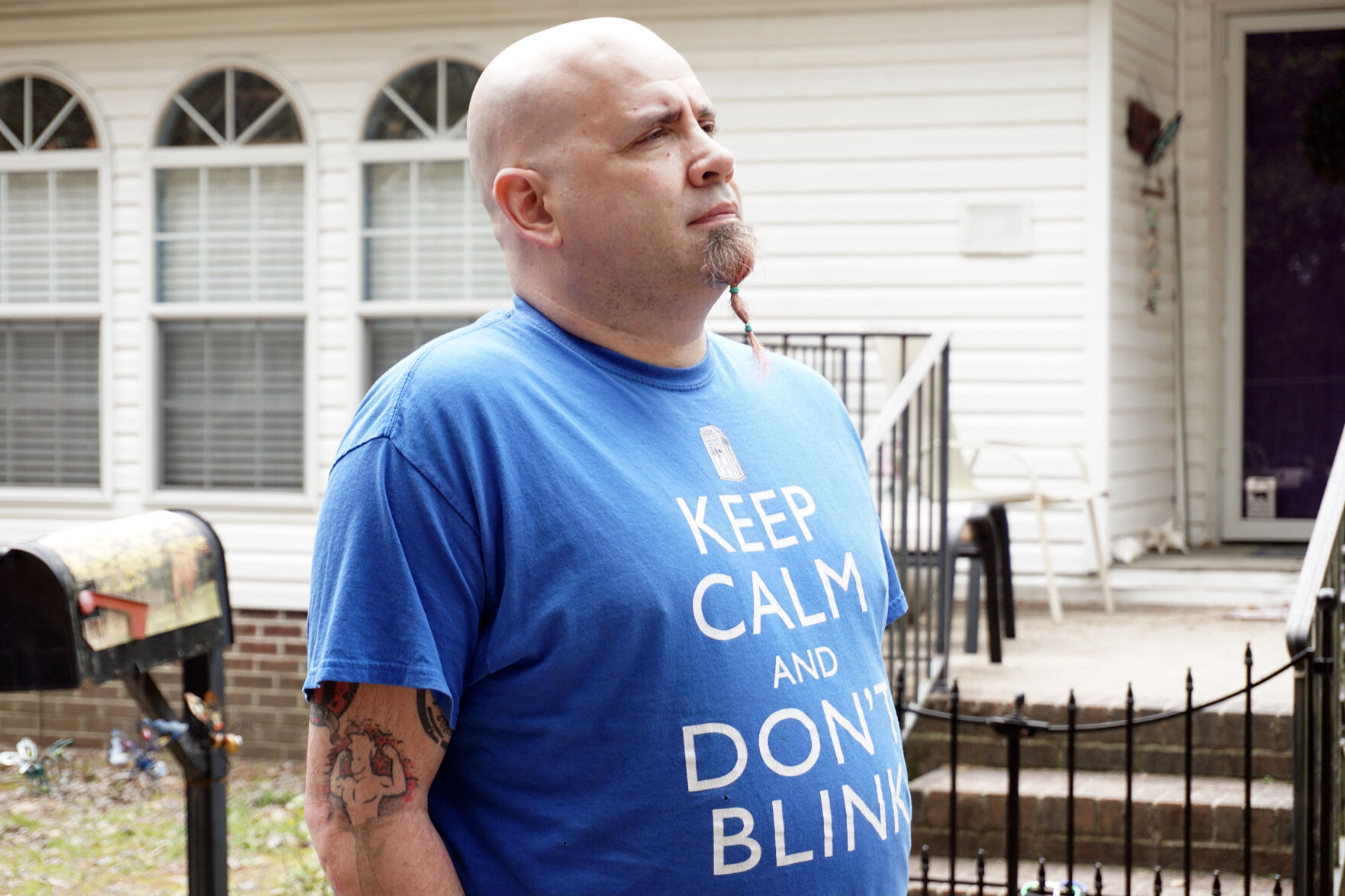
Ronald Rushing Sr. at his home in Southern Pines. He has suffered for months from lingering COVID-19 symptoms. (Photograph by Jaymie Baxley/The Pilot)

Over the course of a few months, Ronald Rushing Sr. went from running marathons with his wife to struggling to walk the length of his driveway in Southern Pines.

Rushing, 47, said he was in the “best shape of my life” before testing positive for COVID-19 in July. He now suffers from incapacitating fatigue, unrelenting head pain and a host of other lingering symptoms, with no finish line in sight.

“My brain is on fire from the time I wake up in the morning until I go to bed at night,” Rushing said in a recent interview. “It’s a burning, sharp pain that runs from ear-to-ear all day long.”

Like other people living with what is sometimes called “Long COVID,” Rushing’s issues began after his infection ended. He experienced only minor symptoms in the weeks immediately following his diagnosis, he said.

“When I tested positive, I had a cough and a sore throat, some fatigue and a headache,” he said. “It started out very mild.”

Rushing’s condition worsened while he was waiting for medical clearance to return to his job at Aldi, where he works as a store manager. His intermittent headache turned into a continuous “burning sensation,” he said, and light activity would cause his heart rate to quicken.

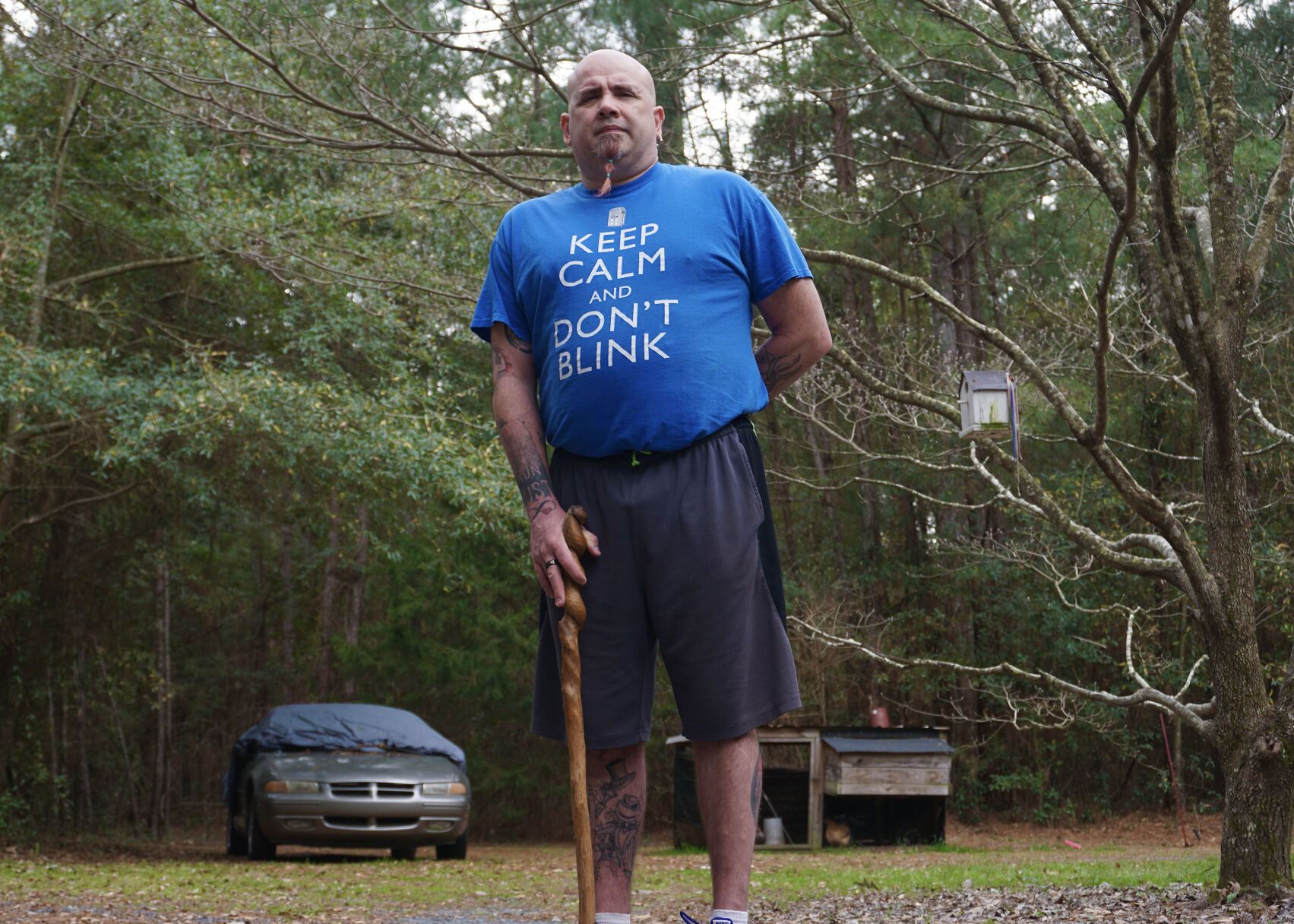
“I couldn’t take the dogs out to use the bathroom or roll the garbage to the curb without feeling like I was dying,” said Rushing, who now uses a cane to walk because he has difficulty maintaining his balance.

His symptoms persisted even after he tested negative for COVID-19 in September. He grew forgetful and sometimes spoke with a stutter.

“I started smelling cigarette smoke throughout the day and it constantly felt like there was smoke in my eyes, but nobody in the house smokes,” he said. “I don’t really leave the house anymore because I can’t figure out what I’m doing most of the time.”

When Rushing does go out, it’s often for testing. He has undergone a CT scan, an EEG, a spinal tap and three M.R.I.s in search of answers.“Everything comes back negative,” he said. “You feel kind of alone and lost in the world because everybody thinks you’re fine since you’re no longer infected. You can’t look at me and know my brain is on fire, so you wouldn’t know that I’m sick per se.”

Before he fell ill, Ronald Rushing Sr. regularly ran marathons with his wife. (Contributed Photographs)

Researchers are only beginning to understand the constellation of post-infection symptoms associated with some cases of COVID-19.

“Most people who get COVID get completely better, but not everybody,” said Dr. Gretchen Arnoczy, an infectious diseases physician with FirstHealth of the Carolinas. “There’s other infections where people have persisting symptoms or changes in function after the infection. And like everything else with COVID, we’re definitely learning (about long-term symptoms) in real time.”

On Tuesday, the journal Annals of Clinical and Translational Neurology published a peer-reviewed study that involved 100 so-called long haulers from across the United States. About 85 percent of participants reported having multiple neurological symptoms that lingered for months.

“We have seen that COVID can cause neurologic effects and can cause effects in the heart, but we’re still trying to understand the scope of that and how it affects the rest of the body,” Arnoczy said in an interview earlier this month. “With COVID, we also know there’s an increased risk of blood clots, heart attacks and strokes after infection. Although anyone who has been in bed sick for a week is going to be at increased risk of blood clot, the increased risk of blood clot after COVID is significantly higher than that.”

But the cause of the symptoms remains a mystery.

“It’s really not yet clear if post-COVID symptoms are due to the persistence of the virus or the virus tripping off something in the immune system, or damage from the virus itself,” Arnoczy said. “Some people have scar tissue in their lungs after COVID, and their symptoms are not due to the virus but the damage that the virus did, even though the virus is gone.”

While there is no approved treatment at this time for Long COVID, preliminary findings from a small observational study conducted by British researchers suggest that vaccination may alleviate some persistent symptoms. The study, which has not been certified by peer review, focused on older patients who were hospitalized with COVID-19.

Rushing has only visited the hospital once during his eight-month ordeal. It was Jan. 6, and he was eating dinner at home with his wife and their young children.

“All of a sudden, I felt like I was drowning,” he said. “I felt like there was liquid shifting back and forth in my brain. It was the most afraid I’ve ever been in my life.”

The doctors, Rushing said, “chalked it up to an unknown neurological episode.”

Five months before he tested positive for COVID-19, Rushing ran a marathon with his wife at Walt Disney World Resort in Florida. A wall of the couple’s home is festooned with medals and ribbons from the many races they’ve competed in together.

“He went from being extremely active to just laying in bed because he can’t do anything else,” Marsha Rushing said of her husband’s condition. “He’s basically in constant pain now. He’s not able to do family stuff like we used to without him being in excruciating pain.

“If he goes out to the store with us just to get groceries, he’s in bed for the rest of the day because it’s too debilitating. He can’t even sit at the table and eat dinner at night without being in pain.”

Ronald Rushing Sr. said would run seven miles a week before he was diagnosed with COVID-19 in July. He now uses a cane to walk because he has difficulty maintaining balance. (Photograph by Jaymie Baxley/The Pilot)

Ronald Rushing began receiving short-term disability payments from Cigna, his insurance provider, in August. The company stopped paying him on Jan. 22.

“They said my symptoms shouldn’t interfere with my work,” he said, adding that he is in the process of appealing Cigna’s decision.

Rushing will undergo another round of testing next week. He hopes to receive a referral from his primary care physician to participate in a clinic for long haulers that was recently launched by the University of North Carolina at Chapel Hill.

“I would jump on one foot naked in a pond for answers at this point,” he said.

How an Assisted Living Facility in Seven Lakes Overcame an Outbreak

This article first appeared in The Pilot on Sept. 18, 2020.


Amanda Bumin, executive director of Seven Lakes Assisted Living & Memory Care, said her “entire life was consumed” by the six-week struggle to quell a coronavirus outbreak at her facility.

The virus is thought to have moved furtively into the assisted living community through an infected worker. Another infection was later identified at the facility, prompting state-mandated testing for all employees and residents.

Staff members soon bore the stigma of having their facility placed on the state’s list of outbreaks in congregate-living settings. The list includes a running tally of infections and deaths at places where outbreaks have been identified.

Seven Lakes Assisted Living & Memory Care was added to the list in early July. A total of 36 infections and four deaths were eventually linked to the facility in what remains the county’s third largest outbreak in a long-term care setting.

Amanda Bumin, left, with her staff at Seven Lakes Assisted Living & Memory Care. (Photograph by Ted Fitzgerald/The Pilot)

But Bumin knows the numbers don’t tell the whole story. She knows that successfully curtailing an outbreak also means overcoming professional challenges and personal turmoil. And she knows her team succeeded.

“We did a pretty damn good job,” she said in a recent phone interview. “Looking back, I’m a thousand percent confident of that.”

Travails of Testing

A coronavirus outbreak is defined by the N.C. Department of Health and Human Services as two or more active infections in a nursing home, prison or assisted living community.

In facilities with outbreaks, all residents and employees must undergo testing. This meant Bumin had to find enough testing kits for her 45 residents. She also needed to find a registered nurse who could administer the tests.

“We’re not a skilled nursing facility, so we don’t have a nurse on site 24/7 to just administer tests,” she said.

The Moore County Health Department had recently offered to conduct mass testing at any local long-term care facility that requested the service. But when Bumin contacted the health department, she was told it would be at least a week before testing could begin.

“I can’t wait until the middle of next week to even administer a test,” said Bumin, who urgently needed to know how many of the facility’s elderly residents may have been exposed to the virus. “That’s not fair to residents, families or staff members.”

She then reached out to N.C. DHHS, which offered to ship enough testing kits overnight to cover the facility’s residents. A nurse from Bumin’s corporate office arrived the next morning to swab the residents’ noses.

Wanting the results back as quickly as possible, Bumin personally drove the nasal samples to a state-run laboratory in Durham for processing.

With the residents’ tests delivered, Bumin could focus on finding testing for her 25 employees. The problem, she said, was that nearly all of the testing sites available in Moore County at the time required a referral from a primary care physician.

“A lot of my employees might not have doctors,” Bumin said. “A lot of them go to the ER or a walk-in clinic for their health care needs, so getting a doctor’s order is not feasible.”

She was eventually able to secure testing for her staff through CVS Pharmacy, which was the only local provider willing to test patients without a referral. A handful of employees tested positive, including Bumin.

“I was really lucky in that I didn’t have symptoms,” she said. “(The virus) doesn’t discriminate, and it’s kind of unpredictable in who it will or will not affect, and how severely.”

Bumin continued to work following her diagnosis, isolating in her office each day while wearing layers of personal protective equipment. She did not want to “abandon the ship,” she said.

Hard Conversations

As results from the state started streaming in, it became clear that the virus had spread rapidly among the facility’s residents. A total of 31 residents, over two-thirds of the facility’s population, tested positive for COVID-19.

Bumin began the difficult task of notifying their loved ones. A colleague offered to call the families for her, but Bumin insisted on telling them herself. She felt it was her responsibility. 

“That was the hardest part for me personally,” she said. “You feel like you’ve done something wrong.”

Bumin worried that the residents’ families would blame her for the outbreak. She worried she would be a “failure in their eyes.”

Some of the infected residents’ family members cried on the phone, and Bumin wept with them. “No one was mad,” she said.

“Of course, they’re not happy that their mom or dad has COVID, but they trust us and they know that we’re doing everything that we can and we’re doing our very best to keep (their parents) safe and to not let their symptoms get out of control.”

The families continued to receive updates from Bumin as the outbreak wore on. She also posted about the situation on the facility’s Facebook page, and encouraged people in the Seven Lakes area to send notes and gifts to lift the residents’ spirits.

And while most other local facilities with outbreaks ignored inquiries from the press, Seven Lakes Assisted Living regularly sent out news releases detailing its response to the outbreak. Some of the releases included surprisingly forthright comments from Bumin. 

In a statement to The Pilot on July 7, she spoke out against the politicization of “basic infection-control measures,” and urged everyone to wear face coverings.

“Transparency is key,” she said last week. “You can’t try to pretend like it’s not happening. You have to be totally transparent, suck it up and have those hard conversations.”

Hunkering Down

Several of the facility’s workers stayed in hotels to avoid exposing their own families to the virus.

“They were literally either here or at the hotel for a month, and that’s a long time,” Bumin said. “They did their laundry here, ate here and then went to the hotel.”

Bumin also planned to check into a hotel, but she abandoned the idea after her husband and daughter both tested positive. Like Bumin, they did not experience symptoms.

Many staff members took on additional responsibilities during the outbreak. Maintenance manager Allen Hamilton cooked breakfast for residents. Mercedes Webster, director of activities, and Ashley Robinson, an office manager, both helped with housekeeping.

“I was very, very proud of my staff,” Bumin said. “My team is phenomenal.”

The employees, she said, were constantly sanitizing surfaces and enforcing isolation protocols. This was a challenge for workers assigned to the facility’s memory care unit, where residents couldn’t help but undermine the staff’s efforts to contain the outbreak.

“It’s very difficult to keep those residents in their rooms,” Bumin said. “They have Alzheimer’s, dementia and things like that, and they’re always on the move.”

At the same time, Bumin and her staff tried to make sure the community’s residents didn’t feel neglected. They played Bingo together, with socially distanced employees shouting numbers from hallways outside the residents’ rooms.

People in the Seven Lakes community donated puzzles and other activities that the residents could do alone in their rooms. Rodney Godwin, a financial planning consultant who lives near the facility, played his ukulele for the residents over Zoom.

“We tried to remind them that there are still people out there that love them and care for them,” Bumin said, adding that isolation has been shown to accelerate symptoms of dementia among the elderly. “I don’t think my residents, through any of this, have felt forgotten.”

Multiple agencies came to the facility’s aid during the outbreak. The N.C. Public Safety Department’s Emergency Management Division made sure Bumin’s staff never ran out of masks, gowns and other personal protective equipment. “They were a huge help,” she said.

Brandy Baker, a registered nurse on loan from Encompass Health, came in to monitor the sick residents’ symptoms. “She was an angel,” Bumin said.

And while the Moore County Health Department failed to provide timely testing, Bumin said Melissa Fraley, the department’s director of nursing, was a “rockstar” who kept the administration updated on the condition of residents who had been admitted to FirstHealth Moore Regional Hospital for treatment.

“I don’t know what the health department’s staffing situation is or what their job descriptions are, but it did seem like Melissa was single-handedly trying to handle everything,” Bumin said. “I don’t know if that’s everybody’s experience, but for us she was trying her best.”

Through Fraley, Bumin learned that some of the facility’s hospitalized residents had died. Writing in a news release on July 21, the health department said the deceased residents included a woman and three men, all of whom were older than 65.

Again, Bumin knows the numbers don’t tell the whole story. “Those residents were our family,” she said.

In early August, Seven Lakes Assisted Living & Memory Care was removed from the state’s list. The outbreak had ended, according to N.C. DHHS.

Dr. Kevin O’Neil, a geriatrician and chief medical officer for the assisted living community’s management company, said the facility’s staff “never once let the virus impact their commitment to caring for their residents.” In their response to the outbreak, he said, the employees showed “both compassion and resilience at the highest levels.”

“We have been impressed by how Amanda and her team have adapted to this unprecedented time, especially through their own battle with COVID-19,”  O’Neil said. “All assisted living communities could benefit from leadership like Amanda brings to Seven Lakes.”

‘They Cannot Get Sick’

After losing four residents to COVID-19, Bumin has little patience for people who downplay the threat of the disease.

“I can’t comprehend how people don’t understand the reality of COVID-19,” she said. “The only reason that it’s going away a tiny bit is because we had to be forced, kicking and screaming, to abide by things. It’s not because the election is coming up or because the pandemic was made up. It’s because of the precautions that were put in place.”

Sixteen of the 27 deaths attributed to COVID-19 in Moore County are linked to outbreaks in long-term care facilities. Three of those deaths were announced earlier this week in connection with an ongoing outbreak at Accordius Health of Aberdeen, a nursing home where nearly 80 infections have been identified.

It is one of six local long-term care facilities now on the state’s list.

“A lot of people think (the virus) is not that big of a deal anymore, but it’s still a big deal and I don’t know how to get people to realize that or see that,” Bumin said. “These people, this population, they cannot get sick. It is not a risk that should be taken.”

Face coverings, hand hygiene, social distancing. None of it is up for debate, as far as Bumin is concerned. People who haven’t gone through what she experienced “don’t get to argue about it,” she said.

“Society evolves and changes, and we have to evolve and change with it or we’re going to suffer, and there’s a lot of suffering associated with COVID-19,” Bumin said. “I can tell you that because I watched people suffer.”

Moore County NAACP Celebrates Court Victory in Voter Purging Case

The following article first appeared in The Pilot on Aug. 28, 2018.


SOUTHERN PINES, N.C. — Lawyers are crediting the Moore County branch of the NAACP as the driving force behind a recent federal court decision that prevents voters from being purged from the rolls because of undeliverable postcards.

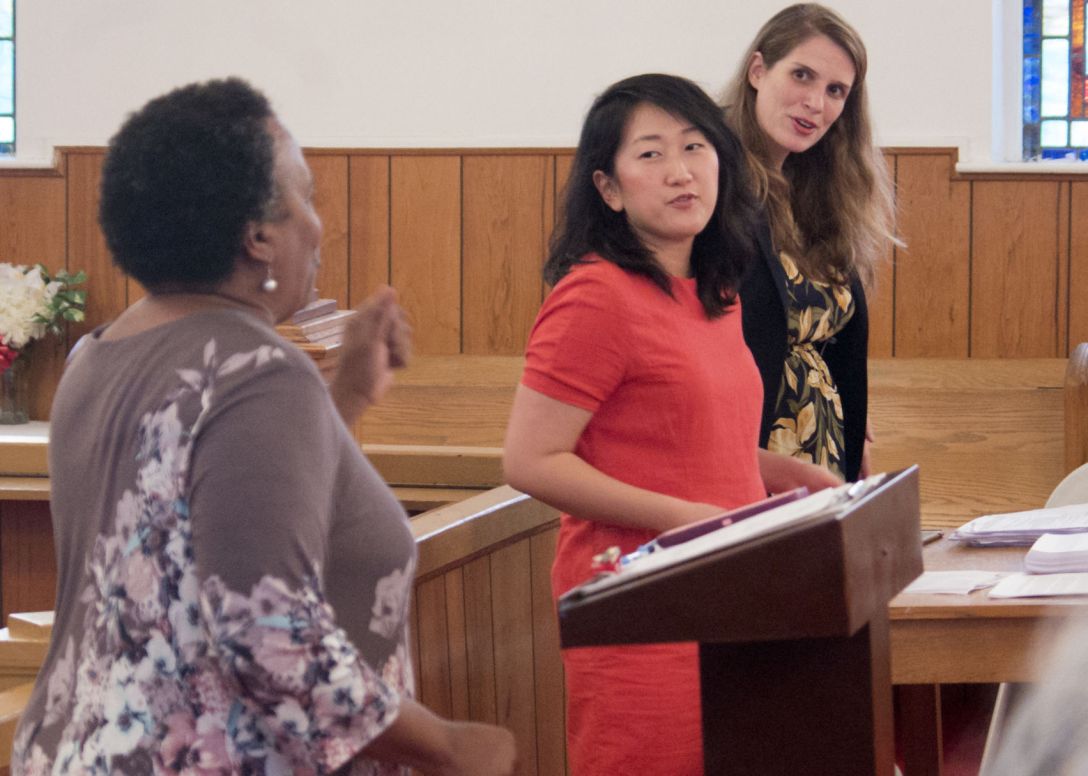
Leah Kang, a civil rights attorney from Durham, said the case “bubbled up” from work done by the Moore County NAACP ahead of the 2016 general election. Members of the Moore County NAACP found that nearly 500 local voters had been expunged from the rolls by the county Board of Elections after postcards sent to the voters’ home addresses were returned as undelivered mail.

Similar purges, it was later found, were happening in Cumberland and Beaufort counties. A lawsuit was brought against the State Board of Elections and against the Board of Elections offices in Moore, Cumberland and Beaufort counties, with the plaintiffs arguing that the postcard-based purges were a violation of the National Voter Registration Act.

“It was an absolute violation of federal law,” said Kang, who represented the Moore County NAACP in the lawsuit. “Federal law tries to protect voters from being removed for something as stupid, really, as a returned postcard.”

An emergency injunction was granted to ensure the residency challenges would not prevent voters from casting ballots in the 2016 election. Earlier this month, Judge Loretta Biggs issued an order to extend the injunction permanently. 

“The uncontested facts show that the Moore County Board violated the NVRA’s prohibition on removing a voter from the rolls during a federal election cycle on change-of-residency grounds (…),” Biggs wrote in the order, which was signed on Aug. 8.

Speaking during the monthly meeting of the Moore County NAACP on Monday in Southern Pines, Kang called the decision a “victory over illegal purging.”

“Because of your legal victory, no county boards from here on forward are permitted to hear and make challenges based on residency,” Kang said. “In many ways, this is the first case of its kind on this particular issue. Its impact will be huge, not just in this case but elsewhere.”

Kang is an attorney for Forward Progress, a civil rights law firm in Durham. She was assisted in the case by Caitlin Swain-McSurely, a lawyer and the stepdaughter of Moore County NAACP president O’Linda Watkins-McSurely.

“My gut feeling was that something was not right about what was going on,” Watkins-McSurely said during the meeting. “We’re celebrating this victory.”

In November 2016, The Pilot reported that the postcard-based residency challenges brought in Moore County included 365 white voters, 92 black voters and seven American Indian voters. Of the challenged voters, 154 were registered as Democrats, 136 were Republicans, 195 were unaffiliated and 10 were Libertarian.

According to a statement from the North Carolina NAACP, the racial breakdown of voters purged in Beaufort County was “disproportionately African American.” In the statement, the Rev. T. Anthony Spearman, president of the association, said it was “fitting” that the recent court order arrived “on the week of the 53rd anniversary of the Voting Rights Act.”

“The odious practice of using mass mailings and undelivered mail to suppress and intimidate voters of color has a long and shameful history in North Carolina,” Spearman said. “(The) federal court decision will ensure that voters are not wrongly disenfranchised on the basis of returned mail.”

A Guide to Nicholas Sparks’ North Carolina

The following article first appeared in The Pilot on Oct. 21, 2018.


Nicholas Sparks, the New Bern author known for “The Notebook,” “A Walk to Remember” and other massively successful romance novels, will headline a sold-out event Monday at Pinecrest High School.

While the writer has yet to base a story in the Sandhills, each of his 20 novels are set in North Carolina. Following is a guide to some of the Old North State locales that have appeared in Sparks’ books.

Location: New Bern | Population: 30,101 | Featured in “The Notebook” (1996); “A Bend in the Road” (2001); and “The Wedding” (2003)

Sparks’ first and arguably best-known novel, “The Notebook,” is set in New Bern, where the author lives. The tearjerker inspired a popular film that catapulted actors Ryan Gosling and Rachel McAdams to stardom. 

Other Sparks novels set in New Bern include “A Bend in the Road” and “The Wedding,” which is a sequel to “The Notebook.”

Location: Wilmington | Population: 119,045 | Featured in “Message in a Bottle” (1998); “Dear John” (2006); “The Choice” (2007); and “See Me” (2015)

Several of Sparks’ most popular stories are set on the beaches of Wilmington. Three of his four novels based in the city, “Message in a Bottle,” “Dear John” and “The Choice,” have been adapted for the big screen.

The film adaptation of “Message in a Bottle” brought in more than $118 million at the box office when it was released in 1999, making it the highest-grossing movie based on a Sparks novel.

Location: Beaufort | Population: 4,199 | Featured in “A Walk to Remember” (1999)

Following the back-to-back successes of “The Notebook” and “Message in a Bottle,” Sparks was perhaps reluctant to veer far from the Carolina coast. His third novel, the coming-of-age romance “A Walk to Remember,” is set in Beaufort, seat of government for Carteret County.

In 2002, the book was adapted into a movie starring Mandy Moore and Shane West.

Location: Edenton | Population: 4,846 | Featured in: “The Rescue” (2000)

Sparks looked north for inspiration when writing his fourth novel. “The Rescue” takes place in Edenton, seat of government for Chowan County, and features fictional characters who volunteer at the town’s fire department.

Location: Rodanthe | Population: 261 | Featured in “Nights in Rodanthe” (2002)

Sparks’ sixth novel is sent in the eponymous unincorporated community, which is located in Dare County. The book was adapted into a 2008 film starring Richard Gere and Diane Lane.

While all of Sparks’ novels are set in North Carolina, “Nights in Rodanthe” holds the distinction of being the only one of his books to include its location in the title.

Location: Swansboro | Population: 2,663 | Featured in “The Guardian” (2003)

Like his previous stories, Sparks’ seventh novel unfolds in Eastern North Carolina. The small Oslow County town of Swansboro serves as the backdrop for “The Guardian.”

The setting was familiar, but the book’s tone marked a departure for the writer. “The Guardian” is a romantic thriller that Sparks said was influenced by the works of Agatha Christie and Stephen King.

Location: Southport | Population: 3,625 | Featured in “Safe Haven” (2010)

Sparks’ 15th novel is set in the Brunswick County city of Southport. Some scenes from the film adaptation of “Safe Haven” were filmed in the city.

Location: Oriental | Population: 900 | Featured in “The Best of Me” (2011)

One of the smallest North Carolina towns featured in a Sparks novel, Oriental occupies little over a mile of Pamilco County. A film adaptation of “The Best of Me” was released in 2014.

Location: Black Mountain | Population: 7,848 | Featured in “The Longest Ride” (2013)

Sparks’ 17th novel was partly inspired by Black Mountain College, the venerable liberal arts school that operated near Asheville from 1933 to 1957. “The Longest Ride” is also Sparks’ longest book, clocking in at 568 pages.

Location: Charlotte | Population: 859,035 | Featured in “Two by Two” (2016)

Breaking again from his tradition of setting stories in small communities along the Carolina coast, Sparks based his 19th novel in the state’s most-populated metropolis.

Location: Sunset Beach | Population: 3,572 | Featured in “Every Breath” (2018)

Released earlier this month, Sparks’ 20th novel takes place in the seaside community of Sunset Beach. A swath of the town, which is part of the metropolitan area for Myrtle Beach, is located on a barrier island.

Fictional settings in the state | Featured in “True Believer” (2005); “At First Sight” (2005); “The Lucky One” (2012)

On his website, Sparks writes that “True Believer,” a supernatural romance novel, and its prequel “At First Sight” were both partly inspired by the “legend of the Brown Mountain lights, a mysterious phenomena of lights that occurred regularly in western North Carolina.”

But because Sparks wanted to set the books in the eastern part of the state, he decided to recast the Brown Mountain legend in the fictional town of Boone Creek. Sparks later based the small fictional community in “The Lucky One” on towns in the Blue Mountain region, according to his website.

He Does a Pretty Good Hank Williams

The following article, which first appeared in The Robesonian in 2014, won a third place award for Arts and Entertainment Reporting from the North Carolina Press Association. 


LUMBERTON, N.C. — Jason Petty remembers the first time he heard a Hank Williams tune. 

“I was 6 or 7 years old, riding in the car with my father,” he said. “One of the songs he used to sing to me was ‘Hey, Good Looking.’ That’s one of the first songs I remember hearing. It was the kind of thing that really leaves an imprint.” 

Those serenades from Dad were a harbinger for Petty, who is now considered the nation’s top Hank Williams impersonator. 

His take on the country music legend has won praise from The New York Times, Rolling Stone and USA Today. Even musicians who were close to Williams have heralded Petty as a second coming. 

“I played with Hank for many years and I was his best friend,” said the late Don Helms, a member of Williams’s backing band, the Drift- ing Cowboys. “No one in my time has come closer to Hank ’s look, sound and natural charisma than Jason.” 

Petty will don Williams’s signature 10-gallon hat and music note-patterned suit for a concert Saturday at the Carolina Civic Center. His opening act will be Carolyn Martin, a Grammy-nominated Patsy Cline impersonator. 

A native of Lookout Mountain, Tennessee, Petty began his career entertaining tourists in 1996 as part of a country music sideshow at the erstwhile Opryland theme park in Nashville. 

“Since I was tall and had that look to me, I was asked to portray Hank Williams in one of the shows,” he said. “That prompted me to really study his music.” 

At Opryland, he caught the attention of Randal Myler, a theater director who was adapting Williams’s life story into a jukebox musical. After accepting Myler’s invitation to audition for the lead role, Petty was asked to play an impromptu concert for the show’s backers at Nashville’s storied Ryman Auditorium. 

“It’s tough to play for 15 or 20 people in suits taking notes,” he said. “It was the weirdest show I’ve ever done, but it was also one of the greatest because it kick-started my career.” 

Petty landed the part and “Lost Highway” debuted in 2003 to positive reviews. Much of the praise went to Petty, who received an Obbie Award for his performance. 

The production, which often called for as many as eight shows a week, took a toll on Petty. He left “Lost Highway” to become a touring tribute artist. 

At 43, Petty has outlived his inspiration by more than a decade. Williams was 29 years old when he died of a heart attack in 1953. The troubled star was found surrounded by empty beer cans and unfinished song lyrics in the backseat of a Cadillac. 

Williams left behind a legacy at odds with itself. He was the winking cowboy troubadour behind infectious trifles like “Move It On Over” and “Hey, Good Looking.” He was also the self-destructive outlaw behind timeless tearjerkers like “Your Cheatin’ Heart” and “I’m So Lonesome I Could Cry.” 

“He had that Saturday night, Sunday morning personality that all of us have,” Petty said. “There’s this beautiful simplicity to his music that speaks to the heart of the common man and woman. I tell people that Hank was responsible for many men being able to cry in public. They would go into a bar and order a beer and a Hank song, then they would commence to cry in their beer.” 

Tom Hiddleston will soon try to loosen Petty’s hold on the market for Hank Williams impersonators. The English actor recently signed on to play Williams in “I Saw the Light,” a biopic due out in 2016. 

Petty says he isn’t worried about the competition. 

“For me, it’s just a great honor to help people fall in love with Hank’s music all over again,” he said. “Nobody gets rich doing what I do. You show me a Hank Williams impersonator who says he’s rich, and I’ll show you a liar. We do it for the love.” 

MTV’s ‘Promposal’ to Feature Gay High School Couple

The following article, which first appeared in The Pilot on May 16, 2017, won a first place award for Arts and Entertainment Reporting from the North Carolina Press Association. 


Brandon Caddell was learning how to waltz on a recent Tuesday at Carolina DanceWorks in downtown Southern Pines. He didn’t know how to dance, which was a problem if the teenager planned to take his boyfriend Noah Ambrose to prom at Pinecrest High School.

Hidden from sight in a separate ballroom, a film crew huddled around a tiny monitor to watch Caddell. The crew had been shadowing him for days collecting footage for a prom-themed reality show that will air next month on MTV.

Caddell and Ambrose are set to appear in an upcoming episode of “Promposal.” They will be the first gay couple featured on the series, which debuted Sunday after the season premiere of MTV’s long-running “My Super Sweet 16.”

“We were contacted by somebody from casting and then we did the whole audition process,” Ambrose said. “Then when we were contacted by MTV, they said they’d love to have us and that we would be the only LGBT-identifying couple in this season.”

The episode follows the two Pinecrest students as they prepare for prom. Ambrose is president of the Spectrum Club, the school’s Gay-Straight Alliance chapter, while Caddell serves as the group’s vice president.

When they’re not advocating for fellow LGBT students, Ambrose and Caddell volunteer with organizations like Equality N.C., Sandhills Pride and the Moore County chapter of the NAACP. They hope the show will draw national attention to their activism.

“We’re really privileged to be able to have the kind of platform that we do and the kind of support that we do around here,” Ambrose said. “We want to show LGBT kids watching the show that it does get better and there’s hope for them.”

The episode will touch on “what it is like to grow up gay in small town North Carolina,” according to a news release.

“Too many LGBT teenagers have to live their lives in the closet and aren’t able to ask the person they care about to prom,” Caddell said. “This was a great opportunity for us to show everyone it is possible to be out and happy in a small community.”

The couple’s faith is also expected to come up during the half-hour show. Caddell and Ambrose are both members of Emmanuel Episcopal Church in Southern Pines.

Looking back on the filming of “Promposal,” Ambrose says he was struck by the “positivity of everybody helping us to convey our message.”

“It’s definitely something that I’m going to remember for the rest of my life,” he said.

The episode will air at 10:30 p.m., June 5 on MTV.

Once a Ballerina, Her Life Now Pivots on a Kidney

The following article first appeared in The Pilot on April 12, 2019. 


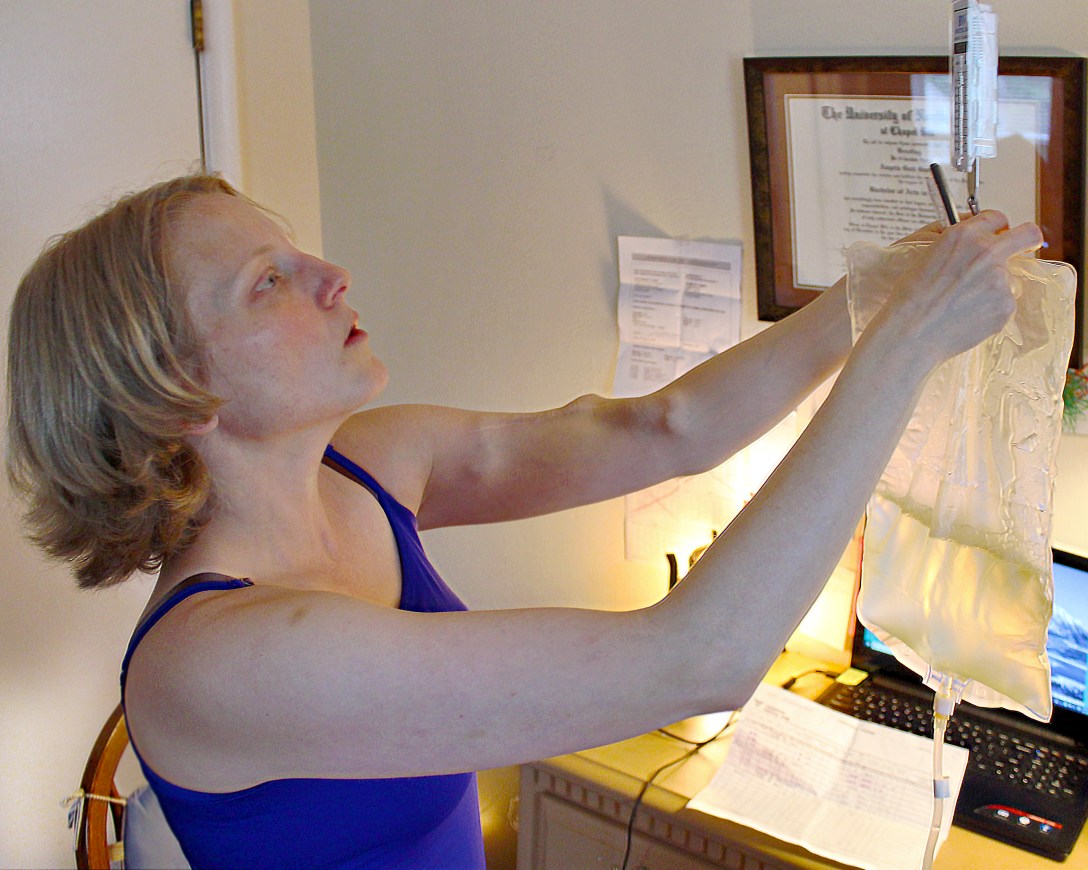
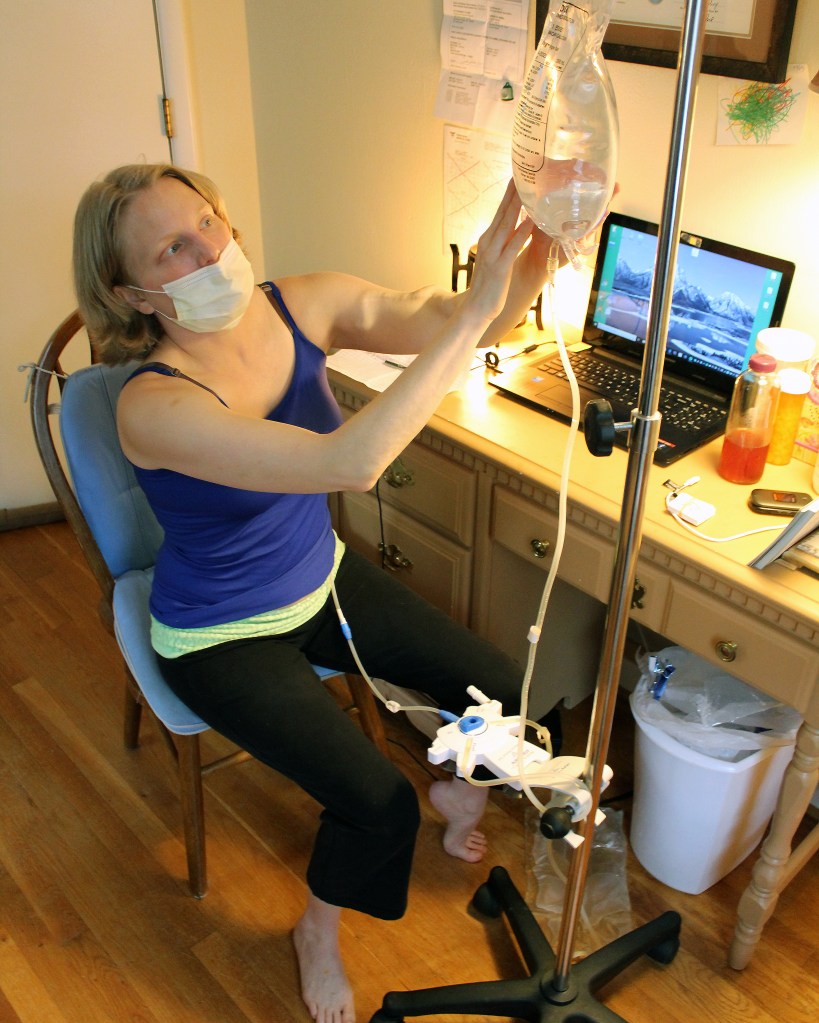
On Friday morning, Angela Gaskell used a needle to push nearly two pints of blood-cleansing fluid through a surgically implanted catheter in her stomach.

The treated blood traveled to her peritoneal membrane, which redirected the waste her kidneys can no longer filter out. After being ferried back by the fluid, the waste was drained from Gaskell’s body through the catheter. The whole process took about 10 minutes.

She repeated the ordeal four hours later, and repeated it again four hours after that. The routine will start over around the same time tomorrow and every day until Gaskell, 38, finds a replacement for her failing kidney.

The regimen has been part of Gaskell‘s daily life since she was diagnosed with end-stage renal disease in 2014. She believes her decision to immediately begin dialysis after her diagnosis is the reason she can still urinate.

“A lot of people on dialysis can’t pee,” she said. “I think because I started dialysis right away, that helped preserve some kidney function.”

For Gaskell, the manual approach, known as peritoneal dialysis, is preferable to hemodialysis, the more common form of treatment that requires several long visits to a clinic each week. Another option would require her to spend nine hours tethered to a whirring machine every evening at home.

Gaskell briefly tried the home device, sometimes called a night cycler, but she disliked how forcefully it sapped blood from her body. “It was painful,” she said.

The peritoneal method is not as convenient, but Gaskell said it allows her to be more independent.

“I don’t have to have this big machine in my room, and I don’t have to rely on electricity if there’s a storm,” said Gaskell, who currently lives with her mother near downtown Southern Pines.

Still, Gaskell said she must always “think 10 steps ahead” when planning her day. Her part-time job as a receptionist at Pinehurst Surgical Clinic is scheduled around her peritoneal exchanges. Long-distance travel is mostly off the table. 

“I can’t go to the beach unless we’re staying at the beach,” she said.

Some trips are manageable with preparation. During a recent visit to the mountains, she drained the dialysate fluid from her body before leaving home and replenished it after reaching her destination.

Gaskell was once a professional ballerina. She performed with the Carolina Ballet, the Cincinnati Ballet and the Hungarian National Ballet.

In 2004, she was diagnosed with lupus. The autoimmune disease took a toll on Gaskell’s kidneys, derailing her promising future in ballet.

“My career was cut way short,” she said. “That was really hard because being a dancer was my identity.”

Angela Gaskell holds a photograph taken when she was a professional ballet dancer. (Photograph by Jaymie Baxley/The Pilot)

Gaskell is one of 27 Moore County residents on the national waitlist to receive a new kidney through the death of a registered donor. Several factors are used to determine a patient’s placement on the list, with small children taking precedence. 

More than 3,160 people in North Carolina are on the list. Over 2,780 of them are in need of kidneys, making it the state’s most sought-after organ.

Data from the national Organ Procurement and Transplantation Network, which is overseen by the U.S. Department of Health and Human Services, shows that 193 kidney transplants have been performed so far this year at the state’s six transplant centers. All but 38 of the kidneys were harvested from non-living donors.

There are more than 5 million registered organ donors in the state, but the pool of usable body parts is significantly smaller than that. Kidneys can only be harvested from benefactors who are pronounced dead at a hospital. Organs cannot be taken from registered donors who die at home or in vehicle accidents.

Even when a donor dies on the operating table, there is no guarantee their kidneys will be fit for transplant. Nearly 450 of the state’s donated kidneys have been discarded by surgeons since 2014, the year Gaskell was placed on the waitlist.

Gaskell said it could be years before a cadaver that shares her O-negative blood type becomes available. On top of the wait, kidneys harvested from dead donors are less dependable than organs from living contributors.

“You’re better off with a living donor,” Gaskell said. “The chances of being healthier and having the kidney last longer are higher.”

Angela Gaskell during one of her three daily peritoneal dialysis exchanges. (Photograph by Jaymie Baxley/The Pilot)

An event will be held at the Shaw House in Southern Pines later this month to help match Gaskell with a living donor. She hopes the event, which is being called Spring for Angela, will also boost awareness for others in need of organ transplants.

Local donors and recipients of organs will speak about their experiences during the event. Gaskell thinks their success stories could persuade attendees to register to become organ donors. 

According to the National Kidney Foundation, dialysis patients have an average life expectancy of five to 10 years. This year marks the fifth anniversary of the start of Gaskell’s treatment.

If she succeeds in her search for a living donor, Gaskell will still need to find a way to pay for the transplant. The procedure typically costs more than $414,000, only a portion of which is covered by insurance.

The National Foundation for Transplants is raising money to defray some of the potential costs associated with Gaskell’s surgery. Tax-deductible donations can be made through her profile on the foundation’s website.

Photographer With Autism Captures Town’s Heart

The following article first appeared in The Pilot on Dec. 5, 2019. 


Joseph Hill, the perpetually upbeat, roving photographer for the Southern Pines Welcome Center, sees life from a different angle.

He has autism, which may explain some of the recurring themes in his work. Many of Hill’s photographs emphasize the subtle patterns and geometric forms he finds in mundane objects.

In 2015, Hill made a still-life photograph of a tabletop napkin dispenser at the Ice Cream Parlor on Northwest Broad Street. The picture’s composition struck a chord with Anthony Parks, the restaurant’s owner.

“Joseph takes interesting pictures of regular things, and I thought that particular visual said a lot about the life of a small-town diner,” Parks said. “The napkin dispenser is something that’s there every day, but people never consider the beauty and art of it.”

Napkin dispenser at The Ice Cream Parlor in downtown Southern Pines. (Photograph by Joseph Hill)

Hill, 25, keeps a copy of the picture in his portfolio, a three-ring binder bulging with hundreds of pages of photographs. During a recent interview at the welcome center, he carefully removed a 6×4 print from its translucent sleeve for inspection.

“This is the first photo I ever took,” he said of the image, which shows a freight train barreling along the railroad tracks near Crystal Lake in Vass.

He snapped the picture with his mother’s camera when he was 13 years old. Teresa Hill was taking an online photojournalism course at the time, and her train-obsessed son had tagged along for a class assignment.

“I wasn’t really into photography, but I loved trains. Then we saw the train coming, and taking a picture of it felt cool,” Joseph Hill said. “I kept saying, ‘did I get it, did I get it?’ That’s how it all started.”

Joseph Hill was diagnosed with autism at age 2. He was later diagnosed with Crohn’s, an inflammatory bowel disease that caused severe damage to his intestines, forcing doctors to remove his colon.

In 2013, a vocational rehabilitation counselor told Teresa Hill that her son, who had just graduated from high school, should find a job cleaning tables to supplement his disability benefits. She balked at the idea.

“Joseph’s mother was concerned that vocational rehab’s recommendations weren’t career opportunities,” said Suzanne Coleman, a family friend and director of the welcome center. “They were more hospitality-oriented, busboy-type jobs, and she wanted more for him. She knew he had a creative side.”

Shortly after her meeting with the counselor, Teresa Hill and her husband began brainstorming ways their son could turn his zeal for photography into a career.

“One night, me and my mom and my dad started having all these creative ideas about how my photos could become a photography business,” Joseph Hill said. “We had such an awesome night, taking notes and channeling ideas of how all my photos could be put to good use.”

Sunsets are among photographer Joseph Hill’s favorite subjects. (Photograph by Joseph Hill)

The family soon began selling postcards, T-shirts and other items emblazoned with his photographs at local festivals. After joining the welcome center’s board of directors in 2016, Coleman invited Joseph Hill to serve as the facility’s de facto photographer.

“What I love about Joseph’s photographs is that he sees things that other people don’t see,” Coleman said. “He shoots from the heart.”

The last couple years have been tough for Joseph Hill.

His mother died suddenly on Feb. 13, 2018. His father, Joseph Bullock Jr., was later diagnosed with kidney cancer (the affected kidney was removed in November).

The men live together in Vass on a limited income. They receive some support from nonprofits like The Arc of Moore County, which provides services to the families of residents with disabilities.

“Joseph has overcome a lot, but he’s always been the young man who looks at the glass as being half-full,” said Wendy Carter, executive director of The Arc. “He doesn’t dwell on the sadness.”

Carter said adults who have autism or autism spectrum disorders are too often shunned by people who wish to avoid uncomfortable interactions. The concern, she said, is generally unfounded.

“If they simply take the time to actually talk to a person with autism, they will probably come away from the conversation with a lifelong friend,” Carter said. “And that’s especially true of Joseph. He’s definitely one of my favorite people, and he’s a joy to be around.”

Individuals with autism, Hill said, “are seen in a different way because we do things differently than normal people.”

“For example, I often like to wave at people even though I don’t know them,” he said. “We have a lot of different characteristics, but it’s a fact that an autistic person can really bring a lot of positivity to the world.”

Nov. 2 was National Deviled Egg Day, and Hill marked the occasion by sharing a photograph of the hors d’oeuvres on Twitter.

He tweeted a snapshot of a Boston cream pie on Oct. 23, the day dedicated to the dessert. On Nov. 21, he photographed a carton of Stove Top mix in honor of National Stuffing Day.

For National Eat a Cranberry Day, which falls 48 hours after National Stuffing Day, Hill posted an image of Ocean Spray cranberry sauce. Two days later, the company tweeted a reply.

“What a saucy photo,” @OceanSprayInc wrote. “Thanks for choosing Ocean Spray!”

Hill was elated. In an emoji-laden response, he thanked the company (twice) for commenting on his picture.

“For me growing up, every Thanksgiving, me and my family always look forward to serving your delicious cranberry sauce with our Thanksgiving dinner,” he wrote.

The bubbly endorsement was quintessential Hill, according to Coleman.

“In the 11 years I have known him, I have never once heard him utter a single negative word,” she said. “He is the most positive, kind-hearted, caring person I have ever met.”

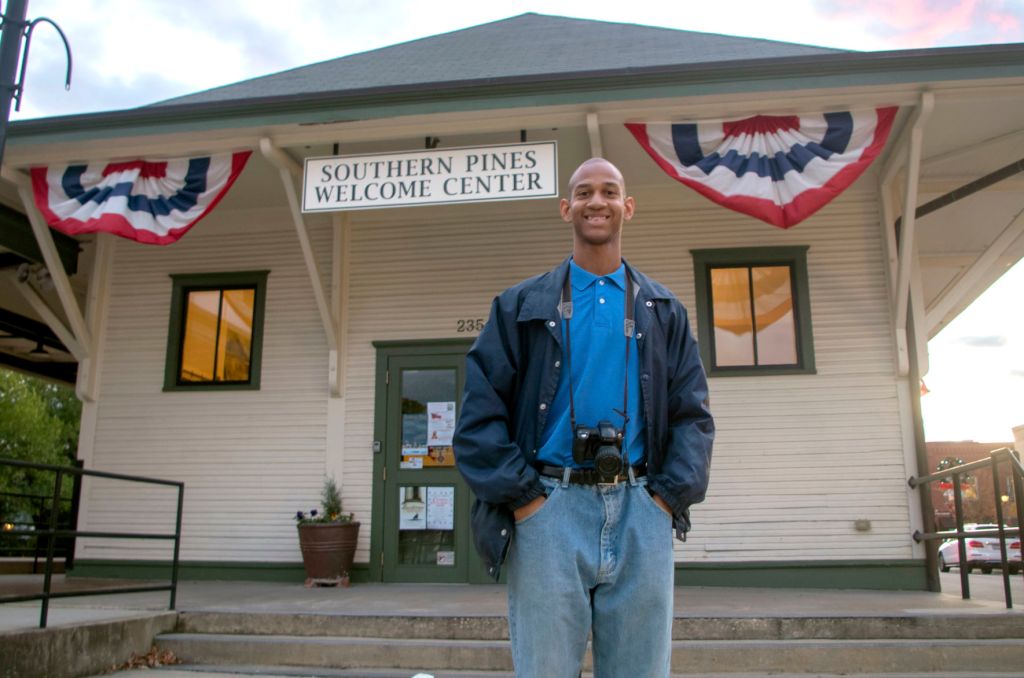
Joseph Hill stands in front of the Southern Pines Welcome Center on Dec. 2, 2019. (Photograph by Jaymie Baxley/The Pilot)

On weekends, Hill can be found roaming the sidewalks of Southern Pines in search of interesting things to photograph for the welcome center. Coleman said Hill will invariably visit every open business to chat with employees while making his rounds.

“Joseph’s photographs are very popular, but Joseph is just as popular as his photographs,” she said. “He’s like the unofficial mayor of downtown Southern Pines.”

Hill hopes to expand his photography business to other parts of Moore County in 2020. His goal, he said, is “to go as far as possible.”

“Maybe I can eventually go to another state or travel the U.S.A., or who knows, maybe I can travel to another country,” he said. “But the point is, photography-wise, I just want to be the best that I can be wherever I go.

“I don’t want to be better than anyone else. I just want to show that as a person with autism, I have what it takes.”

He Fought the Law on Video Gambling, and the Law Won

The following article first appeared in The Pilot on Sept. 18, 2019.


For the past six years, a Moore County businessman has been embroiled in a closely watched legal saga involving video slot machines.

Richard Frye, owner of Sandhill Amusements in Southern Pines, said he was surprised when the N.C. Court of Appeals on Tuesday overturned a 2017 ruling that found certain gaming kiosks, sometimes called sweepstakes machines, did not run afoul of the state’s gambling laws. The reversal will end a permanent injunction protecting businesses that operate the games.

The latest ruling, Frye said, is unfair to companies that market machines like the ones distributed by Sandhill Amusements. These suppliers usually share income with the restaurants, bars and convenience stores that house the machines.

“As far as I’m concerned, the court is wrong,” Frye said. “They didn’t follow the facts in the case or in all the many cases that led up to this final case, but there’s nothing I can do about it.”

The kiosks distributed by Sandhill Amusements are pre-loaded with slot machine games that allow players to win gift vouchers, which can be redeemed for cash or online prizes.

After determining the games were in violation of state law, sheriff’s deputies began seizing kiosks from businesses across Onslow County in 2013. Sandhill Amusements later sued the state and the Onslow County Sheriff’s Office. The N.C. Supreme Court ruled against the company in 2015.

Gift Surplus, the Arizona company that developed the kiosks’ software, then added features to give players more control over the games’ outcome. Finding that the updated games relied more on “skill and dexterity” than on chance, Superior Court Judge Ebern T. Watson III ruled in favor of Sandhill Amusements in 2017.

The recent appellate decision was issued with separate opinions from three judges, each of whom cited different reasons for tossing out the lower court’s ruling. With the injunction vacated, law enforcers will be free to seize Gift Surplus kiosks from businesses and to impose fines on people caught playing the games.

State gambling laws are enforced by the Alcohol Law Enforcement division of the North Carolina Department of Public Safety. Erin Bean, special agent with the division, said ALE will not immediately begin cracking down on the machines.

“While the Court of Appeals issued an opinion (Tuesday), the court’s mandate, or official notification to the clerk of court of the opinion, will not occur until Nov. 4,” Bean wrote in an email. “ALE will continue to monitor this case and will take enforcement action as authorized by law.”

Frye said Sandhill Amusements will remove all of its Gift Surplus-branded machines from businesses before the court’s mandate goes into effect.

“There’s no real recourse for us at this point,” he said.

Caught in the Middle

Frye believes Sandhill Amusements was an innocent casualty in the state’s war on sweepstakes parlors, establishments he views as little more than clandestine casinos.

“What the state really wants to do is get rid of the big sweepstakes rooms, and my company doesn’t do those,” he said. “I’ve never owned a game room. I hate the game rooms, quite frankly.”

As the president of Entertainment Group of North Carolina, an organization that lobbies for the amusement machine industry, Frye has advocated for legislation banning sweepstakes parlors.

“We tried to get a bill passed to get rid of the game rooms, because that’s the major problem,” Frye said. “Everything they’re running is games of chance, and it’s highly illegal. They’re the big outlaw in the business, and I knew that if we got rid of them, then we had an opportunity to stay on the street in small, limited numbers.”

According to Frye, Sandhill Amusements never installed more than four Gift Surplus kiosks at a single location.

“The only way (the state) could get rid of the big game rooms was to get rid of everybody, so they shot us down,” he said, adding that many sweepstakes parlors have been “hiding behind” the injunction granted to Sandhill Amusements. “Now that the injunction is gone, I would say the game rooms are probably all going to be gone within 30 days.”

In one of the three written opinions issued on Tuesday, Judge Hunter Murphy said it is irrelevant “whether chance or skill predominates in the current iteration of Gift Surplus’s sweepstakes.” The statute relating to sweepstakes machines, he wrote, “explicitly proscribes sweepstakes conducted through electronic display, which is ‘visual information, capable of being seen by a sweepstakes entrant, that takes the form of actual gameplay, or simulated gameplay[.]’”

“The trial court erred in concluding Gift Surplus’s sweepstakes do not violate (state law) because the sweepstakes in question are run through the use of an entertaining display,” Murphy wrote.

An Embattled Industry 

Frye, who rarely gives interviews, has been in the vending business for nearly 40 years. He started out with coin-operated Pac-Man and Donkey Kong games in the early 1980s.

“They were minting quarters,” he said. “It was very lucrative for several years.”

Demand has since waned for traditional arcade cabinets, and many manufacturers are increasingly focused on high-end golf and bowling machines that offer more immersive gameplay. These machines, Frye said, typically cost between $6,000 and $7,000.

“They’re terribly expensive, and at 50 cents a shot for players, it’s hard to recoup your investment,” he said. “It’s gotta make double what it’s worth because you’re splitting income with the location, and I’m not going to invest in any more equipment if it takes five to 10 years to pay for it.”

Frye suspects the latest ruling will have wide-ranging implications for the industry. He believes the state will “go back to the old redemption law,” which prohibited amusement machine operators from offering prizes worth more than $10.

If that happens, Key Master-style arcade games that give players a chance, albeit slim, of winning iPads and other electronic devices would be prohibited. So would the crane games that entice players with prizes like jewelry and wristwatches instead of plush animals.

And that’s a problem for small suppliers like Sandhill Amusements. Most restaurants and retailers have lost interest in traditional arcade cabinets. They want games that make money.

Frye appears to be losing interest, too. Or perhaps he’s simply drained after attending more than 50 court hearings related to his video slot machines since 2013.

“I’m 70 years old and I’ve survived two bouts with cancer,” he said. “I’m getting a little tired, to tell you the truth.”